Livestock Identification and Tagging: A Complete Guide for Farmers and Pet Owners

Livestock Identification and Tagging: A Complete Guide for Farmers and Pet Owners
Introduction
Livestock Identification and Tagging is now a core part of modern animal management for farms, smallholdings, and even some large companion animals like horses. It links each animal to clear records for ownership, health, movement, and disease control, and is increasingly required by law in many regions. Electronic tags, visual ear tags, tattoos, microchips and brands all play a role in how farmers and pet owners mark and monitor their animals over their lifetimes.
Beyond simple numbering, Livestock Identification and Tagging supports traceability in disease outbreaks, proof of ownership in theft cases, and better decision‑making about breeding, feeding, and welfare. Choosing and applying the right system correctly helps protect animals, safeguard food chains, and keep farms compliant with changing regulations.
What is Livestock Identification and Tagging?
Livestock Identification and Tagging is the process of assigning a unique, permanent or semi‑permanent identity to each animal or group of animals, then recording that identity in a management or regulatory system. Traditional approaches include ear tags, tattoos, ear notching and branding, while modern systems add electronic identifiers such as radio‑frequency identification (RFID) tags and implanted microchips.
Each identification method has specific features:
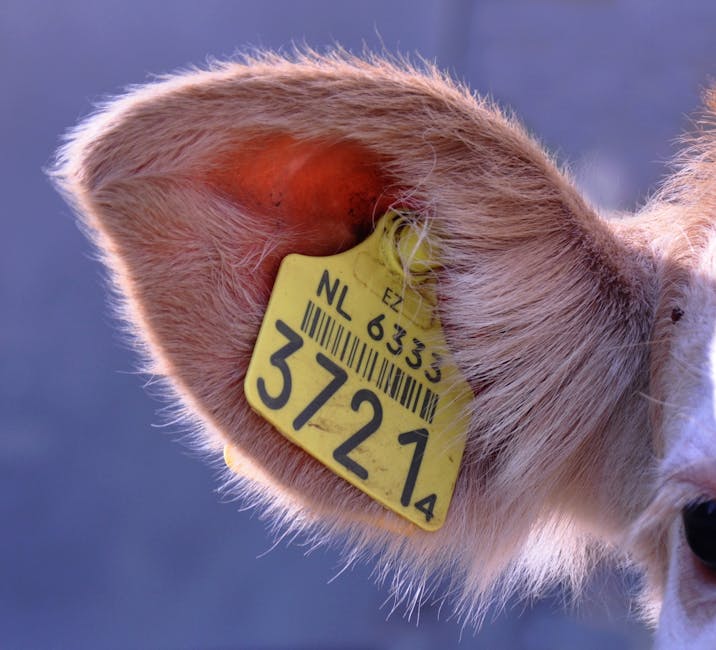
- Ear tags (visual or electronic) attached to the ear with an applicator, commonly plastic or metal.
- Brands (hot or freeze) applied to skin to create a permanent mark used mainly in cattle and horses.
- Tattoos placed inside the ear or lip for purebred, show or registry animals.
- Microchips implanted under the skin containing a permanent digital code.
- Electronic ID (EID) systems (RFID ear tags, collars, boluses) that store data and communicate with readers for automatic data capture.
These tools feed into wider traceability programs. For example, U.S. systems such as the National Animal Identification System (NAIS) and current disease traceability rules use premises identification numbers (PINs), individual animal identification numbers (AINs) and group/lot numbers to connect animals with locations and movements over time.
Why Livestock Identification and Tagging Matters for Farmers and Pet Owners
For farmers, Livestock Identification and Tagging is vital for disease control and traceability. Animal disease traceability systems track where animals are, where they have been and when, so veterinarians and regulators can quickly contain outbreaks. Efficient tracking reduces the number of animals involved in investigations and minimizes economic loss, helping farms maintain business continuity.
Identification improves herd and flock management. Electronic ear tags, microchips and collars allow producers to link each animal to health records, breeding history, weight gain, and milk production. Some systems even automate feeding or milking based on tag data, especially in intensive dairy or feedlot operations. This makes it easier to identify poor performers, track treatments and comply with withdrawal times for medications.
For pet and horse owners, identification is crucial for reuniting lost or stolen animals and for compliance with testing and movement rules. Microchipping significantly improves return‑to‑owner rates for lost pets and is widely used in horses and livestock to aid recovery of stolen animals and traceability in disease events. In some areas, permanent identification (brand, tattoo or electronic ID) is required as part of testing for diseases like equine infectious anemia, and has been shown to help locate owners after disasters.
Key Facts About Livestock Identification and Tagging
Animal identification methods differ in visibility, permanence, welfare impact and cost:
- Visual ear tags are low‑cost, easy to see, and commonly used on cattle, sheep, goats and pigs, but they can fall off or be removed.
- RFID ear tags cost more per tag than simple visual tags but can be scanned electronically to reduce errors and speed data capture.
- Brands and tattoos provide permanent identification but can cause significant pain (especially hot‑iron branding) and may affect hide value or raise welfare concerns.
- Microchips provide permanent, internal, unalterable identification that is often less painful than branding; they require a scanner to read.
Regulations are moving increasingly towards electronic identification as “official” ID. In the United States, federal Animal Disease Traceability rules require official identification and movement documentation for interstate movement of cattle, bison, sheep, goats, swine, horses, captive cervids and poultry, with exceptions defined by rule. A final U.S. rule now makes visually and electronically readable ear tags the required form of official identification for sexually intact cattle and bison 18 months and older, rodeo and exhibition cattle, and all dairy cattle moving interstate, with specific deadlines for the continued use of older metal tags.
Animal health and veterinary organizations emphasize that permanent, unique identification of animals and premises is essential for protecting the livestock industry, public health, and enabling rapid trace‑back and trace‑forward during highly contagious disease outbreaks. They also encourage development and use of alternatives to more painful methods like hot‑iron branding, in favor of electronic systems that preserve welfare while strengthening traceability.
Practical Guide to Livestock Identification and Tagging
Farmers and animal owners looking for a clear guide to Livestock Identification and Tagging should start by clarifying their goals: regulatory compliance, theft prevention, disease control, performance tracking, show registration, or a mix of these. The best method depends on species, scale, budget, technology level, and local rules.
Choosing the Right Identification Method
When deciding how to Livestock Identification and Tagging on your operation, consider:
- Species and size:
- Cattle and small ruminants commonly use ear tags, brands (for cattle and horses), or tattoos.
- Swine may be ear tagged, tattooed or notched, though some frameworks do not accept ear notching due to welfare and infection concerns.
- Production system:
- Extensive beef systems may favor durable visual tags and brands.
- Dairy and intensive systems gain from RFID tags linked to feeding and milking software.
- Welfare and handling: Methods that minimize pain and stress (properly applied ear tags, professional tattooing, microchipping) are preferred over more painful options like hot branding.
- Regulations: Check national and state/provincial rules for what counts as “official” identification. In many U.S. contexts, 840‑series RFID and metal NUES ear tags are standard, with a shift toward scannable electronic tags only.
For many farms, the most balanced tips for Livestock Identification and Tagging are to use:
- Visual + RFID ear tags as the primary identification.
- Microchips for high‑value animals or where required by discipline or registry.
- Brands or tattoos only where legally required or for specific management reasons.
Applying Ear Tags Correctly
Ear tags remain the most common first step in a practical guide to Livestock Identification and Tagging, especially for cattle, sheep and goats. Good technique reduces infections, tag loss and stress:
- Restrain the animal safely using a chute, headgate or handler appropriate for the species.
- Clean the ear and tag applicator before each use; disinfecting the applicator between animals reduces infection risk.
- Choose the correct position: Place the tag in the middle third of the ear, between the cartilage ribs, avoiding visible blood vessels to reduce bleeding and pain.
- Apply the tag firmly in one smooth motion. For RFID systems, many programs recommend the left ear for electronic tags, with visual herd tags in the other ear, unless local rules specify otherwise.
- Check for proper closure and clear visibility of the number or code.
After tagging, monitor the ear for swelling, redness, discharge or foul smell. Use topical antiseptics (for example, hydrogen peroxide) for several days if advised locally, and seek veterinary help if infection becomes severe.
Implementing Electronic and Microchip Identification
Electronic ID is central to modern Livestock Identification and Tagging systems. RFID ear tags and microchips allow automatic reading and data capture:
- RFID ear tags store a unique code linked to databases. They can be read quickly as animals move past a panel or handheld reader, improving accuracy and labor efficiency.
- Microchips are implanted under the skin, usually in the neck or shoulder region in large animals, and between the shoulder blades in pets. They provide permanent identification that cannot be easily altered, and support higher rates of return when animals are lost or stolen.
To use these systems effectively:
- Register each tag or microchip number to your premises and animal record.
- Keep digital records (birth, treatments, movements, breeding events) attached to each ID.
- Use compatible readers and software to avoid data gaps.
- Comply with national premises and animal ID programs where available.
Integrating Identification With Records and Movement
Identification is only as good as the records behind it. For livestock moved between farms, states or countries, regulations often require:
- Official identification (ear tag, microchip, etc.).
- An interstate or international certificate of veterinary inspection (ICVI/CVI) or equivalent movement document, increasingly digital and designed to handle electronic ID data.
Digital systems that link veterinary health certificates with RFID tags help veterinarians and producers track movements accurately, reduce paperwork, and support fast traceability if disease occurs.
Common Mistakes to Avoid
Many problems with Livestock Identification and Tagging come from poor planning and technique. Common errors include:
- Using unapproved methods for official movement: For example, relying on temporary backtags where authorities require official ear tags or microchips. Some states explicitly do not recognize backtags as official ID for intra‑ or interstate movement.
- Placing ear tags incorrectly: Tags placed too close to the head, on the ear edge, or through large blood vessels increase the risk of tearing, bleeding, infections and tag loss.
- Ignoring cleaning and hygiene: Using a dirty applicator from animal to animal raises infection risk at the tag site, leading to abscesses and early tag loss.
Another frequent mistake is underestimating welfare and hide value impacts. Hot‑iron brands, especially when large or poorly placed, cause significant pain, inflammation and prolonged sensitivity, and may reduce hide value. Some methods like ear notching have higher infection and welfare concerns and may not be accepted by some regulatory programs.
Administrative errors are equally damaging: failing to record which tag or microchip belongs to which animal, or not updating records when tags are replaced, leads to confusion during sales, testing, or disease investigations. Improper or inconsistent numbering systems also reduce the usefulness of data captured from RFID or microchips.
Q: What is the main purpose of Livestock Identification and Tagging?
A: The main purposes are to establish clear ownership, support disease control and traceability, comply with movement and testing regulations, and improve herd and flock management. Identification systems let veterinarians and regulators quickly track where diseased or exposed animals have been, reducing the number of animals affected and limiting economic losses.
Q: Which identification method is best for my farm?
A: The best method depends on species, scale, technology and legal requirements. Most farms use visual ear tags plus, increasingly, RFID electronic tags. Brands or tattoos may be required in some registries or regions, while microchips are ideal for high‑value animals, pets and horses where permanent, hidden identification is needed. The optimal system balances visibility, permanence, cost, labor and animal welfare.
Q: Are ear tags enough for official movement and traceability?
A: In many regions, yes—provided they are official tags that meet government standards (for example, metal NUES tags or 840‑series RFID tags in the U.S.). Regulations specify which species and movements require official ID and documentation, and there is a trend toward requiring scannable electronic tags for cattle and bison moving interstate. Always confirm local rules, because backtags or informal tags often are not recognized as official identification.
Q: Do identification methods hurt the animals?
A: All physical identification methods cause at least brief discomfort, but the level varies. Properly applied ear tags and tattoos cause short‑term pain and minor tissue damage; microchip implantation is generally quick and well tolerated. Hot‑iron branding causes marked pain, inflammation and prolonged skin sensitivity, raising specific welfare concerns. Professional technique, hygiene and choosing less invasive methods where possible help protect animal welfare.
Q: How can I prevent infections after tagging or other identification?
A: Use clean equipment, disinfect the tag applicator between animals, and avoid large blood vessels when applying tags. After tagging, monitor ears or identification sites daily for several days. Topical antiseptics may be recommended to reduce infection risk; if you see significant swelling, heat, discharge, or if the animal seems systemically ill, seek veterinary assistance promptly. Early care reduces complications and tag loss.
Q: Why are electronic (RFID) tags becoming mandatory in some places?
A: Electronic tags can be read quickly and accurately without restraining animals individually, and the data can feed directly into digital traceability systems. This greatly speeds up trace‑back and trace‑forward during disease outbreaks and improves record‑keeping for health, movement and certification. Because of these advantages, some federal rules now require ear tags that are both visually and electronically readable for certain classes of cattle and bison moving interstate.
When to Call a Veterinarian
Veterinary involvement is recommended at multiple stages of Livestock Identification and Tagging. Veterinarians can help design identification systems that meet regulatory standards, incorporate appropriate technology, and support disease control planning. They are familiar with official ID devices and can advise on suitable methods for each species and production system.
You should call a veterinarian if you observe complications at identification sites: extensive swelling, heat, purulent discharge, foul odor, tissue necrosis or signs of systemic illness after tagging, branding, tattooing or microchipping. Severe ear infections, incorrect tag placement or branding injuries may require professional treatment to prevent chronic pain, production losses or carcass condemnation.
Veterinarians are also the key partners for movement documentation and testing. They issue certificates of veterinary inspection that reference official identification numbers, and they help ensure your animals meet testing and identification requirements for interstate or international travel, exhibitions, sales and slaughter. Early consultation helps avoid rejected shipments, legal issues or delays at markets and borders.
Conclusion
Livestock Identification and Tagging is no longer optional for most modern farms and many animal owners. It underpins disease traceability, regulatory compliance, food safety, animal recovery and informed management decisions. A thoughtful combination of visual tags, electronic ID and, where appropriate, permanent marks such as tattoos or brands allows each animal to be uniquely and reliably tracked throughout its life.
By understanding the strengths and limitations of each method, following best‑practice application techniques, and integrating identification with accurate records and veterinary guidance, farmers, students and pet owners can implement robust, welfare‑friendly systems. As regulations increasingly favor electronically readable identification and digital documentation, investing in sound Livestock Identification and Tagging today will protect your animals, your business and the wider livestock industry for years to come.